
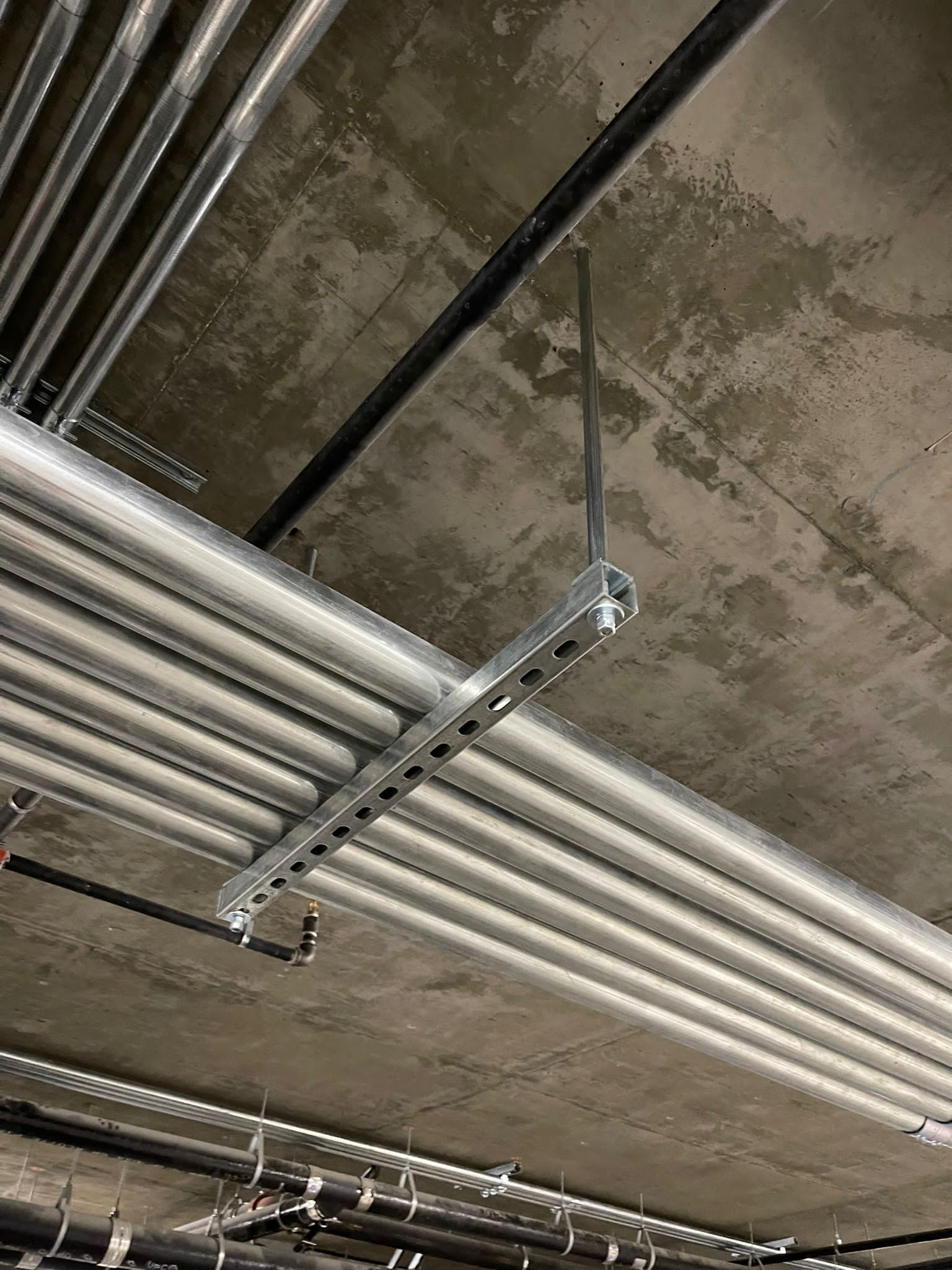
Protected Pathways for Reliable Electrical Routing
Utility Conduit Installation in Santa Clarita for new construction projects, service expansions, and infrastructure upgrades requiring durable wiring protection
Lariat Electric installs conduit systems that protect electrical wiring from physical damage, moisture, and environmental exposure in both underground and above-ground applications. If you are building a new structure in Santa Clarita, Burbank, Simi Valley, or a surrounding area, expanding your electrical service to outbuildings or remote equipment, or upgrading infrastructure to meet current code requirements, conduit provides a rigid or flexible enclosure that keeps conductors safe and accessible for future modifications without requiring excavation or demolition to access buried or concealed wiring.
Conduit installation involves trenching for underground runs, mounting hardware for surface or overhead routing, and installing junction boxes at transition points where wiring direction changes or circuits split. Lariat Electric selects materials based on installation conditions, using PVC for direct burial in stable soil, rigid metal conduit for mechanical protection in high-traffic areas, and flexible conduit where routing must navigate around obstacles or absorb vibration. All installations comply with utility standards and electrical code requirements for depth, support spacing, and bonding to ensure long-term durability and safety.
If you need conduit installed for a service upgrade, new building, or equipment relocation in Santa Clarita, contact Lariat Electric to review routing options and confirm compatibility with utility requirements.
How Installation Progresses and What You Notice Afterward
You will see that underground conduit installation begins with marking utility locations to avoid conflicts with water, gas, or communication lines, then excavating trenches to the depth required by code and utility specifications. Lariat Electric lays conduit runs with gradual bends to allow wire pulling without excessive friction, and installs pull boxes at intervals that keep cable tension within manufacturer limits. Above-ground installations use straps, hangers, or cable tray systems to support conduit securely and maintain clearances from building surfaces and other infrastructure.
Once conduit is installed and wiring is pulled through, you will notice that circuits energize without issues caused by damaged insulation or compromised connections. The conduit system keeps conductors dry even during heavy rain, prevents rodent damage in areas where pests are active, and allows future circuit additions by pulling new wires through existing pathways without digging or cutting into walls. Lariat Electric labels all junction points and documents conduit routes so that future work proceeds efficiently without guesswork about what lies beneath pavement or inside walls.
The installation also includes sealing conduit entries into buildings and equipment enclosures to prevent moisture intrusion and air leakage that can degrade energy efficiency. Expansion fittings are used where conduit crosses joints or transitions between materials with different thermal expansion rates. This service does not include landscape restoration, concrete removal and replacement, or permitting for work outside electrical scope.
Questions About Conduit Systems and Installation Requirements
Property owners often ask how conduit choices affect installation cost, durability, and future flexibility for electrical modifications.
What determines whether conduit must be installed underground or above ground?
Building codes, utility requirements, and site conditions dictate conduit placement, with underground installations required where overhead lines would violate clearance rules or create visual concerns in Santa Clarita residential areas.
How deep must underground conduit be buried?
Depth requirements vary by conduit type and voltage, with PVC under driveways typically buried at least 18 inches and metal conduit under landscape areas at least 6 inches, though local codes and utility standards may impose stricter minimums.
When should rigid metal conduit be used instead of PVC?
Rigid metal conduit is required where wiring is exposed to mechanical impact, such as along building exteriors at grade level or in areas where vehicles or equipment might strike the installation.
Why does conduit installation improve future electrical work?
Conduit allows new circuits to be added by pulling wire through existing pathways, avoiding the cost and disruption of trenching, cutting into walls, or replacing entire cable runs when capacity or routing needs change.
How long does a typical conduit installation take?
Installation timelines depend on run length, soil conditions, and whether concrete or asphalt must be cut and repaired, but most residential projects in Santa Clarita are completed within one to three days after materials are delivered.
Lariat Electric coordinates with utility companies and inspectors to ensure that installations meet all requirements before trenches are backfilled or walls are closed. If you need conduit installed to support new electrical service or equipment in Santa Clarita, reach out to discuss routing, materials, and scheduling that minimizes disruption to your property.